

How Long Do Coffee Pods Last? Freshness, Safety, Storage
You've stocked up on coffee pods, and now you're staring at a box that's been sitting in your pantry for months. The question hits: how long do coffee pods last, and are they still worth brewing? At PVM Inc., we sell single-serve pods from origins like Bali, Peru, and Mexico, so we hear this question often from customers who want to stock up without sacrificing quality.
The short answer is that most coffee pods remain safe to drink well past their printed date, but "safe" and "fresh" aren't the same thing. That sealed pod protects the grounds from air and moisture, which extends shelf life significantly compared to loose coffee. Still, flavor quality does decline over time, and that matters when you're after the distinct character of a specific origin.
This guide breaks down what those dates on the package actually mean, how to tell if your pods are past their prime, and the best storage practices to maximize freshness. Whether you're a bulk buyer or just found a forgotten box in the back of the cabinet, you'll know exactly what to expect from that next cup.
Why coffee pods last longer than ground coffee
The difference comes down to exposure to air. When you open a bag of ground coffee, oxygen immediately starts breaking down the oils and compounds that create flavor. Every time you scoop out grounds, you introduce more air into the bag. Coffee pods, on the other hand, seal those grounds in an airtight capsule right after roasting, which stops the clock on degradation until you puncture the pod.
The sealed pod acts as a barrier
You get three layers of protection with a properly sealed pod. The capsule blocks oxygen from reaching the grounds, prevents moisture from seeping in, and shields the coffee from light exposure. These three factors cause the majority of flavor loss in coffee. Oxygen triggers oxidation, which turns fresh roasted notes stale and flat. Moisture introduces unwanted chemical reactions and can encourage mold growth. Light accelerates the breakdown of aromatic compounds, particularly in medium and light roasts where subtle flavors matter most.
A sealed coffee pod creates a controlled environment that preserves ground coffee in near-original condition until you're ready to brew.
Ground coffee degrades when exposed
Once you expose ground coffee to air, you're working against time. The increased surface area of grounds compared to whole beans means more contact points for oxygen to do its work. Within two weeks of opening a bag, you'll notice muted flavors and a dull aroma. By the one-month mark, most of the origin character has faded. The oils on the surface of the grounds go rancid, creating bitter or sour notes that overpower whatever freshness remains. Humidity in your kitchen accelerates this process, especially if you store the bag near the stove or dishwasher. That's why how long do coffee pods last extends so far beyond opened bags of ground coffee. The pod maintains the original roast state until the moment you brew, while loose grounds start declining the second you break that seal.
How long coffee pods last by pod type
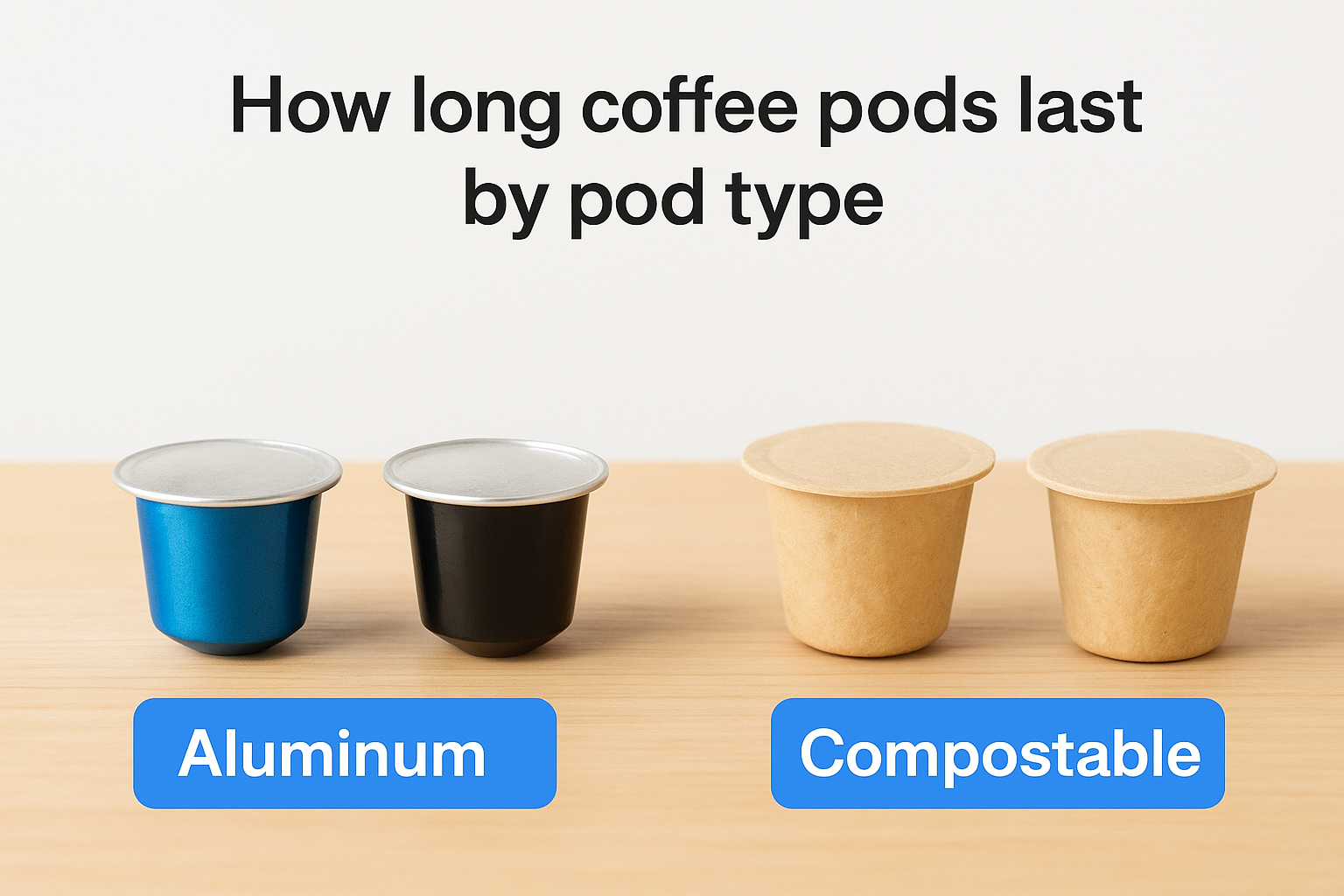
The material your pods are made from directly affects how long do coffee pods last in your pantry. Aluminum and hard plastic capsules create a more effective oxygen barrier than biodegradable materials, which means you get a longer shelf life with traditional pods. Most manufacturers print a "best by" date that ranges from 12 to 18 months from the roast date, but the actual timeline depends on what's sealing those grounds inside.
Aluminum and plastic pods
These are the longest-lasting options you'll find. Aluminum pods typically hold their flavor for 18 to 24 months when stored properly, while hard plastic versions last about the same. The rigid structure prevents any flex or compromise that might allow air to seep in over time. You'll notice minimal flavor loss even at the two-year mark with most premium brands, though the bright top notes start to fade after 18 months. Keurig K-Cups and Nespresso capsules fall into this category, and they're built to survive warehouse storage and long shipping times without degrading.
Aluminum and hard plastic pods maintain an airtight seal that extends shelf life well beyond softer biodegradable alternatives.
Compostable and paper pods
Pods made from plant-based films or paper filters sacrifice some longevity for environmental benefits. You're looking at 8 to 12 months of optimal freshness with these options. The materials are more permeable than aluminum, which means oxygen can slowly work its way through the capsule over time. That doesn't make them unsafe after a year, but the flavor drops off faster than with traditional pods. If you stock up on compostable pods, plan to use them within six months for the best brewing experience.
How to store coffee pods for maximum freshness
Proper storage directly impacts how long do coffee pods last in your home. You don't need complicated systems or expensive containers, but you do need to protect your pods from four main threats: heat, light, moisture, and temperature swings. The sealed capsule does most of the heavy lifting, but your storage choices determine whether those pods maintain their quality for the full shelf life or start losing flavor months early.
Keep pods in a cool, dark location
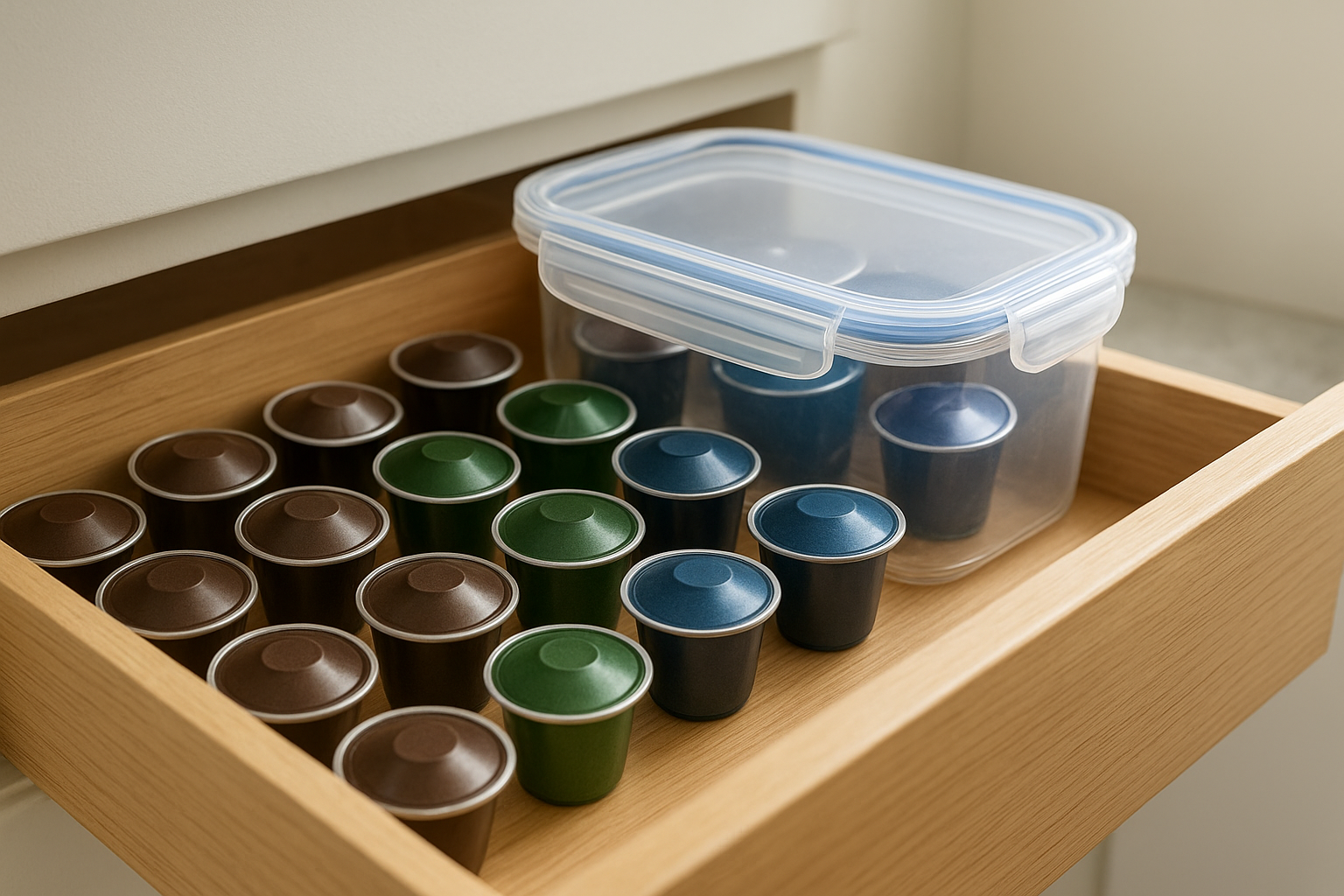
Your pantry or kitchen cabinet works perfectly as long as it stays away from heat sources. Storing pods above the stove, near the dishwasher, or next to a sunny window introduces warmth that accelerates flavor breakdown. Heat causes the oils inside the grounds to degrade faster, which dulls the bright notes and creates a stale taste. Room temperature between 60°F and 75°F gives you the best results. A dedicated drawer or closed cabinet protects the pods from direct light exposure, which matters more with lighter roasts where delicate flavors are most vulnerable.
Store coffee pods in a cool, dark space away from appliances that generate heat to preserve the sealed environment inside each capsule.
Avoid refrigerators and freezers
Temperature fluctuations create condensation when you remove pods from cold storage, which introduces moisture into the capsule once you open it. The fridge also exposes your pods to odors from other foods. Room temperature storage in an airtight container extends shelf life without the risks that come from freezing or refrigeration.
How to know if old pods are safe to use
Safety and quality are two separate issues when you're evaluating old coffee pods. Expired pods are almost always safe to consume because the sealed environment prevents bacterial growth and mold formation. The real question is whether brewing them will give you an acceptable cup of coffee or just hot brown water with no character. You can spot problems by inspecting the pod before you brew, and a simple smell test after brewing tells you everything you need to know about quality.
Check for physical damage
Look for any punctures, tears, or bulging in the capsule before you brew. A compromised seal means air and moisture reached the grounds, which creates conditions for mold or rancidity. You'll see visible damage on aluminum pods where the foil top peeled back or on plastic versions where the seal lifted. Bulging indicates pressure buildup from gas-producing bacteria, which happens rarely but signals you should throw that pod out immediately. Intact pods with clean seals remain safe well past their printed date, even if flavor quality drops.
Physical damage to the pod seal compromises safety, while an intact capsule keeps grounds protected regardless of how long do coffee pods last in your pantry.
Smell and appearance test
Brew one pod and check the aroma immediately after it finishes. Fresh coffee smells bright and inviting, while degraded pods produce a flat, musty, or slightly sour scent. Dark, oily residue in your cup or grounds that look clumped and sticky suggest moisture got inside. The coffee itself might taste stale or cardboard-like, but that's a quality issue rather than a safety concern.
FAQs and troubleshooting for expired pods
Most questions about old coffee pods center on safety versus quality trade-offs. You want to know whether brewing that expired pod will hurt you, damage your machine, or just taste bad. The answers depend on how the pod was stored and what physical condition it's in now, but the general rule holds: sealed pods remain safe far longer than loose coffee.
Can you drink expired coffee pods?
Yes, you can safely drink coffee from expired pods as long as the seal remains intact. The hermetic capsule prevents bacterial growth and mold formation, which means the grounds stay safe to consume well beyond the printed date. What changes is flavor quality, not safety. A pod that's two years past its best-by date will brew a cup that tastes flat, stale, or slightly off, but it won't make you sick. You might notice weak coffee or missing origin characteristics in how long do coffee pods last affects taste more than health.
Sealed coffee pods remain safe to drink years after their printed date, though you'll sacrifice the flavor profile you originally paid for.
Do old pods damage your machine?
Old pods won't harm your brewer unless the capsule deteriorated and left residue in the needle assembly. Inspect the pod before brewing to confirm the seal stayed tight and no visible mold or clumping occurred inside. Properly stored pods maintain their structural integrity regardless of age.
Quick takeaways
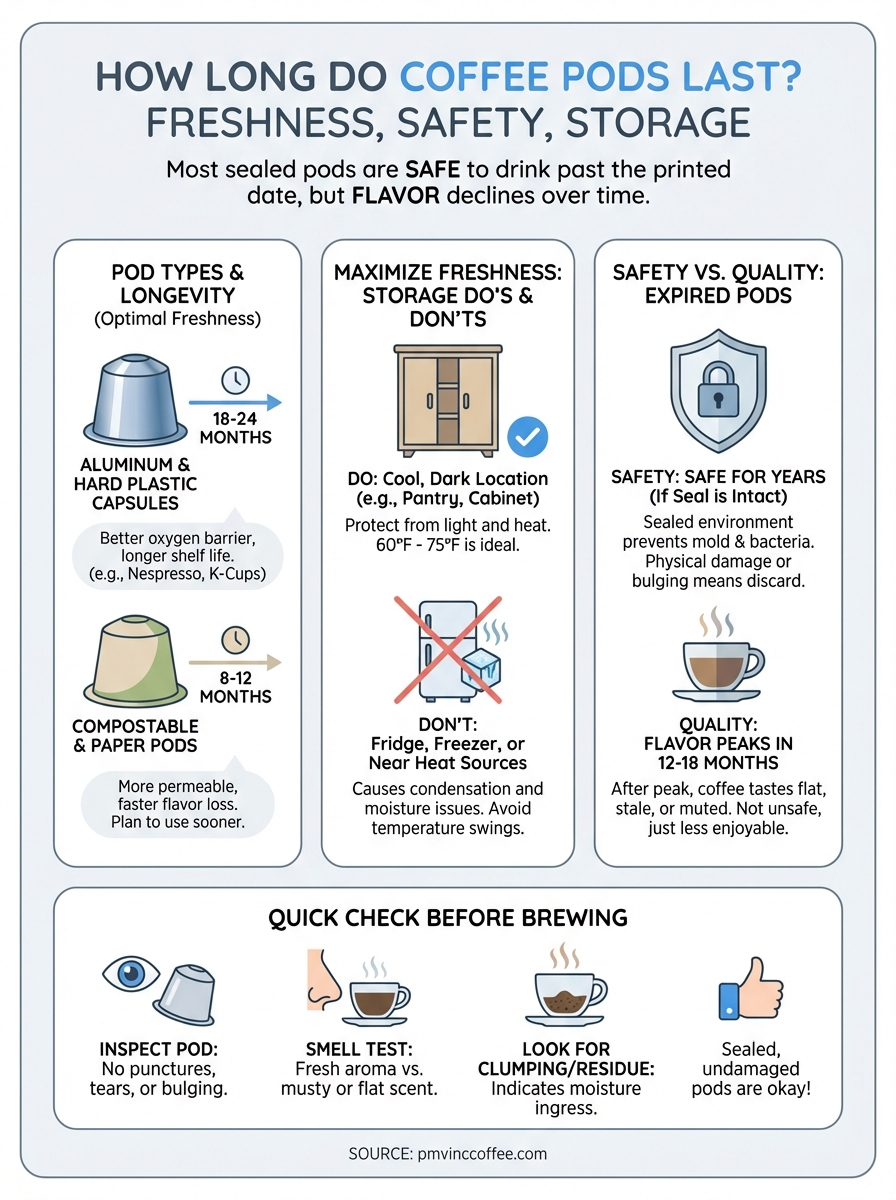
Understanding how long do coffee pods last comes down to one simple fact: sealed pods remain safe to drink for years, but flavor quality peaks within the first 12 to 18 months. Aluminum and hard plastic capsules protect your coffee better than biodegradable options, though proper storage matters regardless of pod type. Store your pods in a cool, dark location away from heat sources, and skip the refrigerator to avoid condensation issues.
The printed date on your pod package indicates optimal freshness, not a hard safety deadline. You can brew pods past that date without health concerns as long as the seal stays intact. Physical damage or bulging signals you should discard the pod, but most properly stored capsules deliver acceptable coffee well beyond their best-by date.
When you're ready to restock with pods you know will stay fresh, check out our single-origin coffee pods from Bali, Peru, and Mexico for the quality that makes proper storage worthwhile.