

What Is Coffee Cupping? Purpose, Process, And How To Try It
Professional coffee tasters don't just sip and guess, they follow a precise ritual that has shaped the specialty coffee industry for over a century. So what is coffee cupping? It's the standardized method roasters, buyers, and quality control experts use to evaluate coffee's aroma, flavor, and overall character without the variables of different brewing equipment getting in the way. At PVM Inc., this process directly informs how we select and roast our single-origin beans from Uganda, Kenya, and beyond.
Cupping strips coffee down to its essentials: ground beans, hot water, and your senses. This approach reveals everything from bright citrus notes to deep chocolate undertones, helping professionals identify defects and consumers discover what they actually enjoy. Whether you're curious about how specialty roasters maintain consistency or want to sharpen your own palate at home, understanding cupping gives you a direct line into coffee quality assessment.
This guide breaks down the purpose behind coffee cupping, walks through the step-by-step process professionals follow, and shows you how to set up your own cupping session with minimal equipment. By the end, you'll know exactly how to taste coffee like the experts do.
Why coffee cupping matters
Coffee cupping establishes a universal language for an industry that spans continents and handles beans from hundreds of origins. Without this standardized approach, a roaster in Seattle would struggle to communicate with a farmer in Ethiopia about whether a particular lot meets quality expectations. The method removes brewing variables like water temperature inconsistencies, grind size differences, and equipment quirks that can mask or amplify certain flavors, giving everyone the same baseline for evaluation.
Quality control across the supply chain
Roasters use cupping to verify consistency between different batches of the same origin and catch defects before beans reach retail shelves. When we receive green coffee shipments at PVM Inc., cupping sessions immediately reveal whether the beans match the sample profile we approved during purchasing. A single moldy bean or fermentation issue that slipped through processing becomes obvious on the cupping table, protecting both our reputation and your experience with our Uganda or Kenya selections.
Buyers rely on cupping to negotiate prices based on actual cup quality rather than assumptions about growing regions or processing methods. A coffee might look perfect as a green bean but taste flat or sour when cupped, which directly impacts its market value. This transparency benefits farmers who invest in superior processing because cupping scores provide concrete evidence of their quality improvements, often translating to premium payments that encourage better practices across entire cooperatives.
Cupping transforms subjective coffee opinions into measurable attributes that the entire supply chain can reference and improve upon.
Training your palate beyond personal preference
Understanding what is coffee cupping does for your own tasting skills matters as much as its professional applications. Regular cupping sessions calibrate your senses to recognize specific flavor notes like berries, nuts, or florals instead of defaulting to vague descriptors like "good" or "strong." You start identifying why you prefer certain coffees over others, which helps you make intentional purchasing decisions rather than grabbing whatever bag has appealing packaging.
Cupping also exposes you to coffees outside your comfort zone in a low-pressure format. You might discover that a light roast from Bali, which you previously avoided, carries stone fruit sweetness you genuinely enjoy when evaluated without the bias of your usual brewing method. This expanded palate makes coffee shopping more adventurous and helps you appreciate craftsmanship in ways that casual drinking never reveals, turning your morning routine into an opportunity for genuine sensory exploration rather than just caffeine delivery.
How coffee cupping works step by step
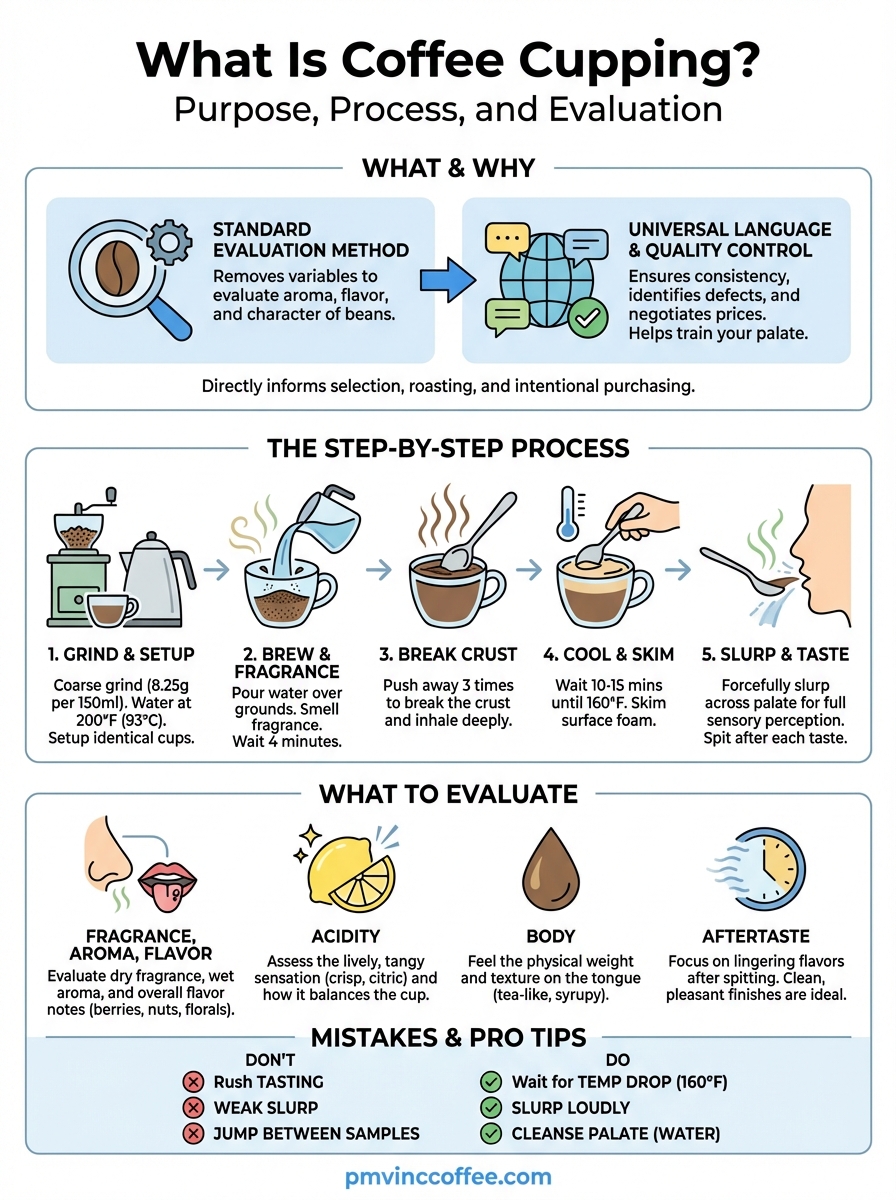
The cupping process follows a rigid protocol that professionals worldwide replicate to ensure consistent results. You start with the same coffee-to-water ratio, identical grind size, and specific water temperature across all samples, which means any differences you detect come from the beans themselves rather than your technique. This standardization answers what is coffee cupping in practical terms: a repeatable system that turns subjective taste into something you can compare and discuss with others using the same framework.
Setting up your cupping table
You need five basic elements to run a proper cupping session. First, grind your coffee to a coarse consistency similar to French press grounds, using 8.25 grams per 150 milliliters of water for each sample. Arrange identical cups or bowls in a row, keeping multiple samples of the same coffee together for comparison. Heat your water to 200°F (93°C) and have cupping spoons ready, the deep-bowled kind that lets you slurp loudly without embarrassment.
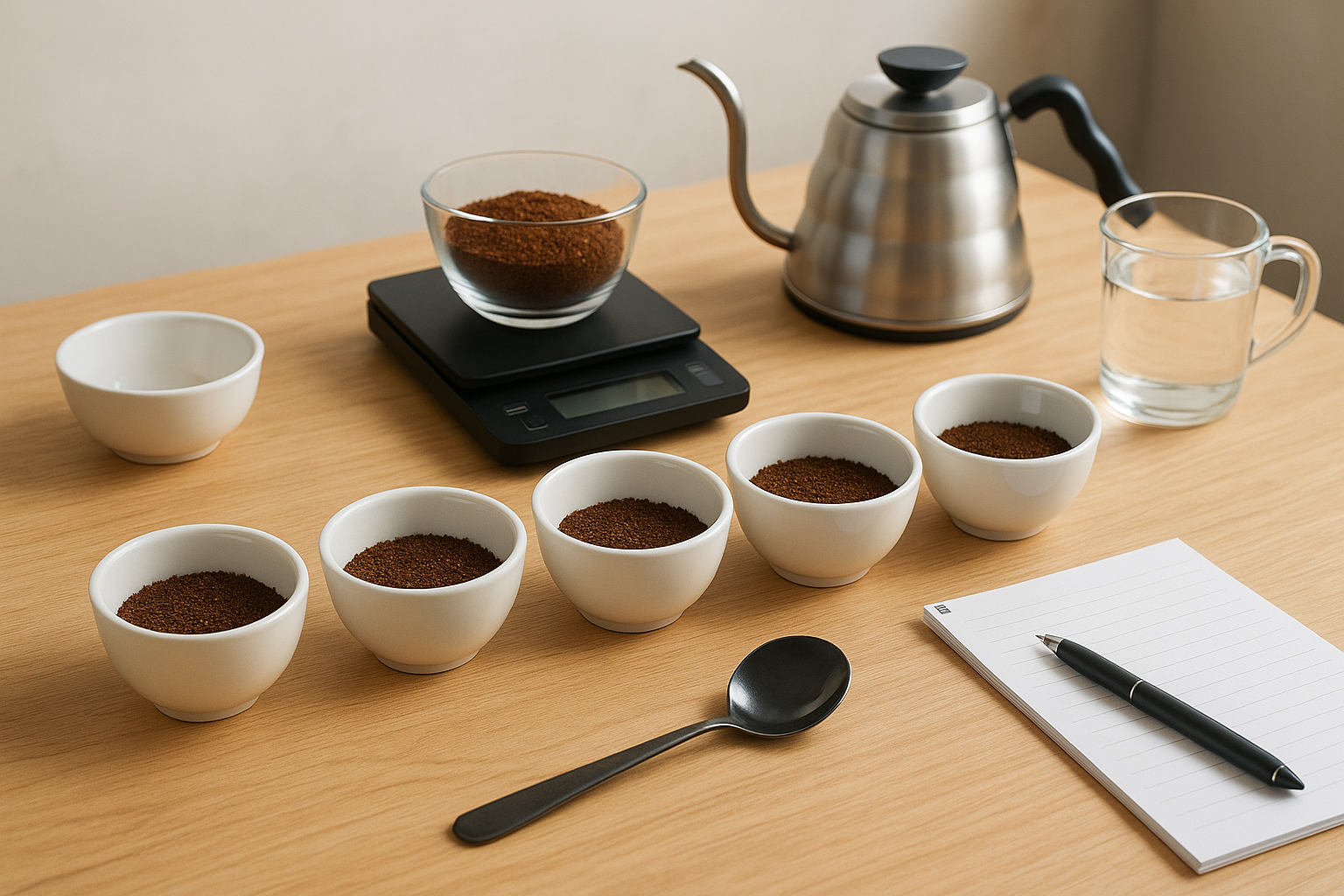
Your setup should include:
- Clean cups (6-ounce capacity works best)
- Freshly ground coffee measured precisely
- Hot water just off boil
- Cupping spoons (rounded soup spoons work)
- A spittoon or cup for expelling coffee
- Scoresheets or a notebook for recording impressions
The cupping sequence from brew to taste
Pour the hot water directly onto your dry grounds and start a timer immediately. You'll notice the coffee begins releasing aromatic compounds as it blooms, which you evaluate by leaning close and inhaling deeply at this stage. After four minutes, use your spoon to break through the crust that formed on the surface by pushing it away from you three times while noting the intensity of released aromas.
Breaking the crust represents the most aromatic moment in cupping, when volatile compounds escape in concentrated form.
Wait another 10 to 15 minutes for the coffee to cool to around 160°F, then skim off any remaining foam from the surface. Now you're ready to taste by loading your spoon and slurping it forcefully across your palate, which sprays the liquid across your entire tongue and vaporizes compounds that reach your nasal passages. You spit after each taste, then move through all samples multiple times as they cool, since different flavor characteristics emerge at varying temperatures.
What to evaluate during a cupping
Professional cuppers assess coffee using standardized criteria that break down sensory experience into measurable categories. You're not just deciding if you like the coffee, you're systematically evaluating specific attributes that contribute to overall quality. This structured approach helps you understand what is coffee cupping at a practical level: a framework for translating subjective impressions into consistent observations that others can verify and discuss.
Fragrance, aroma, and flavor distinctions
You evaluate fragrance while the coffee is still dry by smelling the grounds directly after grinding, which captures volatile compounds that dissipate quickly. This shifts to aroma assessment once you add water and break the crust, revealing how heat transforms those initial scent impressions. Flavor represents what you taste when the coffee hits your palate, combining tongue sensations with retronasal aromas that travel up through the back of your throat during slurping.
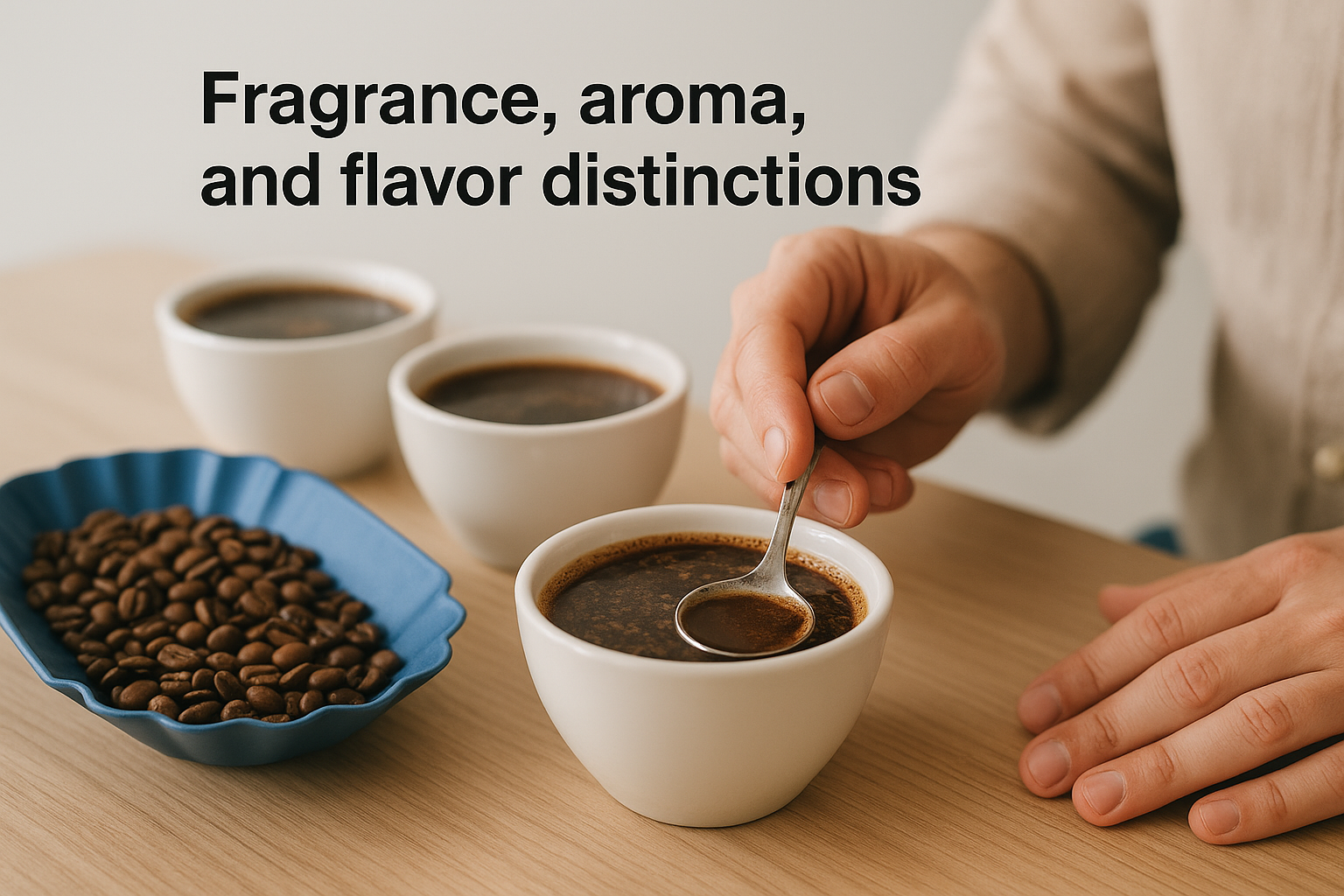
Distinguishing between fragrance, aroma, and flavor trains you to identify where specific notes originate in the tasting experience.
These three categories often reveal different characteristics. Your Kenya beans might show floral fragrance in dry form, shift to berry aroma after brewing, then deliver citrus flavor when tasted. Tracking these progressions helps you spot processing defects or roast issues that might enhance one aspect while diminishing another, giving you concrete feedback on quality beyond simple preference.
Acidity, body, and aftertaste scoring
Acidity describes the bright, tangy sensation that makes coffee lively rather than flat, ranging from crisp apple notes to soft citric undertones. You're not measuring pH levels, you're identifying how acidity enhances or distracts from overall balance. Body refers to the physical weight and texture on your tongue, from tea-like lightness to syrupy heaviness that coats your mouth.
Aftertaste evaluation happens after you spit, when you focus on lingering flavors and how long pleasant notes persist. Clean finishes that fade gracefully score higher than harsh residues or unpleasant bitterness that sticks around. Your Bali pods might show bright acidity upfront but leave a smooth chocolate aftertaste, while a defective batch might taste fine initially but turn sour or astringent as it sits on your palate.
Coffee cupping vs coffee tasting and other methods
Coffee cupping stands apart from casual coffee tasting through its strict standardization and focus on raw bean quality rather than brewing skill. When you taste coffee at home using your pour-over or espresso machine, countless variables influence what ends up in your cup: grind consistency, water mineral content, brew time, and equipment cleanliness all shape the final result. Cupping eliminates these factors by using the same simple immersion method for every sample, which means you evaluate the coffee itself rather than your technique or equipment.
Why cupping differs from casual tasting
Casual tasting lets you enjoy coffee however you prefer, adjusting variables like strength, temperature, and milk additions to suit your mood. Cupping does the opposite by removing personal preference from the equation and forcing you to assess coffee under identical conditions every time. You can't hide defects behind perfect brewing or mask excellence with poor preparation, which makes cupping the diagnostic tool professionals need for quality control.
Cupping reveals what coffee truly tastes like when nothing else interferes with its inherent character.
This stripped-down approach also explains what is coffee cupping at its core: a method designed for comparison rather than enjoyment. You might prefer your morning brew made as a latte, but that preference tells you nothing about whether the beans themselves demonstrate complexity or suffer from defects. Understanding this distinction helps you separate coffee quality from brewing preferences.
Comparison with brewing-based evaluations
Other evaluation methods like triangulation tests or paired comparisons use fully brewed coffee to assess quality, which works well for finished product testing but introduces too many variables for raw bean assessment. A skilled barista might make mediocre beans taste acceptable through proper extraction, while poor technique ruins exceptional coffee. Cupping sidesteps this problem entirely by treating all samples identically from start to finish.
Brewing-based methods serve different purposes than cupping. They help you dial in recipes for specific equipment or evaluate roast development across different preparation styles, but they can't match cupping's ability to isolate bean characteristics from everything else that affects your cup.
Common mistakes and pro tips for better results
Most beginners approach cupping with brewing habits that work against the protocol's purpose, treating it like another coffee preparation method rather than a diagnostic tool. You might rush through steps, skip the slurping entirely, or taste samples in random order instead of following the structured progression that professionals use. Understanding these pitfalls before your first session saves you from developing bad habits that obscure what is coffee cupping actually designed to reveal about bean quality.
Timing and temperature errors
You lose critical evaluation opportunities when you start tasting too early before the coffee drops to ideal temperature, which burns your palate and masks nuanced flavors. Professional cuppers wait until coffee reaches 160°F before their first taste, then continue evaluating as it cools to room temperature since different characteristics emerge at each stage. Conversely, waiting too long means missing high-temperature aromatics that disappear within minutes of brewing.
Temperature management directly affects which flavor compounds you can detect and how accurately you assess coffee quality.
Temperature mistakes compound when you rush between samples without giving your palate time to reset. Cup coffees in a consistent sequence, moving left to right across your table, and return to earlier samples as they cool rather than jumping randomly between hot and cold cups.
Slurping technique and palate fatigue
Weak slurping defeats the entire purpose by failing to aerosolize coffee across your palate and nasal passages where most flavor perception occurs. You need to create enough force that liquid sprays throughout your mouth, which feels awkward at first but becomes natural with practice. The loud slurp professionals make isn't theatrics, it's mechanical necessity for proper evaluation.
Palate fatigue sneaks up when you taste too many samples without breaks or fail to cleanse between coffees using plain water. Your tongue adapts to repeated stimulation and stops registering subtle differences after evaluating more than eight to ten coffees consecutively. Schedule cupping sessions with reasonable sample sizes and rest periods to maintain sensory accuracy throughout the entire evaluation.
Next steps for your own cupping
You don't need expensive equipment or professional training to start cupping at home. Grab any coffee you currently have and follow the basic protocol outlined above using regular soup spoons and coffee cups from your kitchen. Your first session will feel awkward, especially the slurping part, but you'll immediately notice flavor details you've never detected through normal brewing methods.
Start with coffees you already enjoy to establish baseline expectations, then expand into unfamiliar origins or processing methods. Cupping three to four samples side by side reveals differences that disappear when you taste coffees days apart. Understanding what is coffee cupping gives you a practical skill that transforms how you evaluate and purchase beans going forward.
Ready to apply your new cupping knowledge? Explore our single-origin coffees from Uganda, Kenya, and beyond to discover how intentional sourcing and mindful roasting creates the complexity worth evaluating through proper cupping technique.