

Light Roast vs Medium Roast vs Dark Roast: Differences
Choosing between light roast vs medium roast vs dark roast isn't just about picking a bag off the shelf, it's about understanding what makes each one taste, feel, and perform differently in your cup. The roast level affects everything from flavor complexity to caffeine concentration, and knowing these distinctions helps you brew coffee that actually matches your preferences.
At PVM Inc., we roast single-origin beans from Uganda, Kenya, and beyond with one goal: bringing out the character each coffee naturally carries. That character changes dramatically depending on how long those beans stay in the roaster. A light roast from Bali tastes nothing like a dark roast from the same origin, and neither is objectively better, they're just different tools for different coffee drinkers.
This guide breaks down the real differences between roast levels, covering flavor profiles, acidity, body, and yes, the caffeine question everyone asks about. By the end, you'll know exactly which roast fits your taste and brewing style.
Why roast level matters more than most people think
The roast level you choose determines which flavors survive and which flavors get destroyed during the heating process. Most people assume coffee is just coffee, but the difference between light roast vs medium roast vs dark roast is as significant as the difference between steaming vegetables versus charring them. The beans you start with matter, but how you roast them decides whether you taste the fruit notes from Ethiopia or just burnt sugar and ash.
The chemistry behind your morning ritual
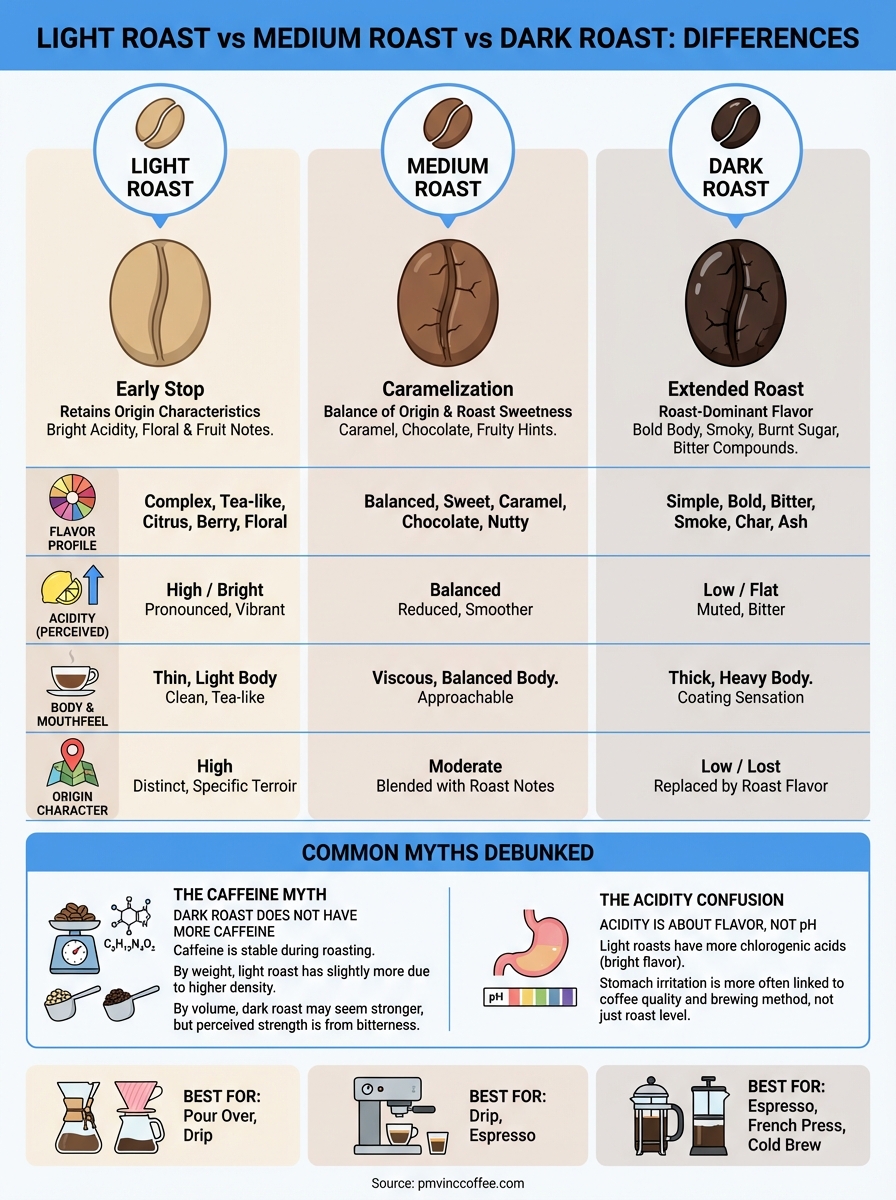
When coffee beans hit high heat, hundreds of chemical reactions occur simultaneously. Light roasts stop the process early, preserving origin-specific characteristics like floral notes, bright acidity, and fruit-forward complexity. Medium roasts push further into caramelization, creating balance between origin flavors and roast-induced sweetness. Dark roasts continue until oils migrate to the surface and structural sugars break down completely, leaving behind carbon-heavy, bitter compounds that taste the same regardless of where the beans came from.
Roasting coffee is controlled destruction: you're deciding which flavors to keep and which to eliminate.
The temperature at which you stop roasting locks in a flavor profile that no brewing method can reverse. You can't add back the citrus notes that burned off in a French roast, and you can't create the bold body of a dark roast by brewing light roast longer.
How roast level controls what you taste
Lighter roasts retain more chlorogenic acid, which translates to pronounced acidity and tea-like clarity in the cup. This matters if you drink single-origin coffee and want to taste what makes Kenyan beans different from Guatemalan beans. Medium roasts reduce that acidity while developing caramel sweetness, creating a balanced cup that works for most people most of the time.
Darker roasts sacrifice origin character for consistent roast flavor, which explains why dark roast drinkers can switch between origins without noticing much difference. The roast itself becomes the dominant flavor. This isn't a flaw, it's a deliberate choice that prioritizes body and bitterness over brightness and complexity. Your preference depends entirely on whether you want to taste the farm or taste the roaster's work.
What changes from light to dark in the roaster
Coffee beans go through radical physical and chemical transformations during roasting, and understanding these changes explains why light roast vs medium roast vs dark roast produce completely different drinking experiences. Raw green coffee beans contain locked-in potential, but heat unlocks specific compounds while destroying others based on how long you expose them to temperature.
Physical transformations you can see
The beans themselves tell the story of what happened inside the roaster. Light roasts retain dense, compact bean structures with little to no surface oil because internal moisture hasn't fully evaporated yet. Medium roasts expand more as internal pressure builds, creating visible cracks on the surface while keeping oils mostly internal. Dark roasts push past the second crack, forcing oils to migrate outward and coating the bean surface with a glossy sheen that feels slick to the touch.
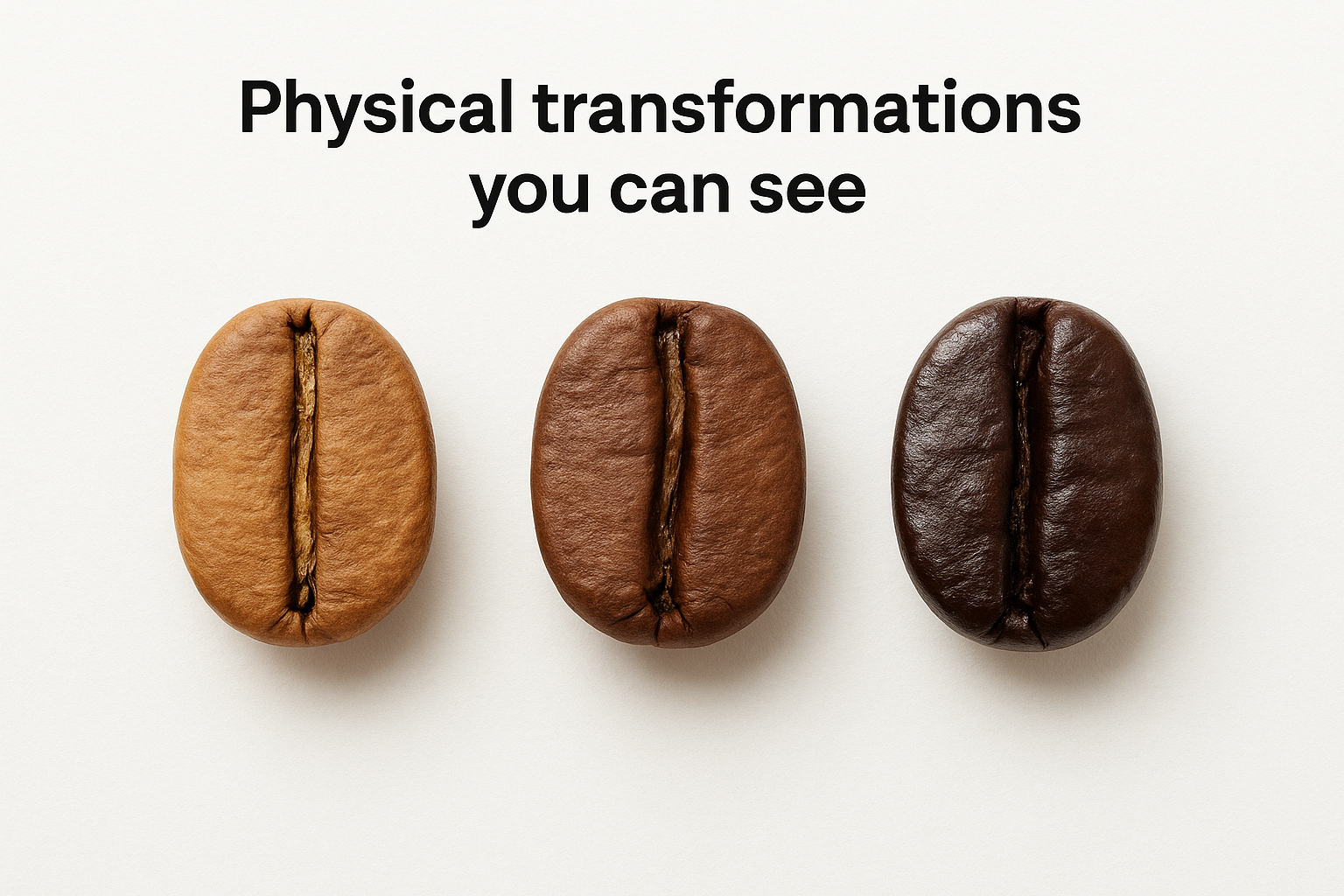
The darker you roast, the more the bean's physical structure breaks down and releases oils that would otherwise stay trapped inside.
Color shifts from light tan through chocolate brown to nearly black, and weight decreases significantly as water content evaporates. A pound of dark roast contains more beans by count than a pound of light roast because each bean weighs less after extended roasting.
Internal changes that affect taste
Heat breaks down complex compounds into simpler, more recognizable flavors. Light roasts preserve chlorogenic acids and volatile aromatics that create bright, complex profiles specific to origin. Medium roasts develop Maillard reaction products that add sweetness and body while maintaining some origin character. Dark roasts carbonize sugars completely, creating bitter, smoky compounds that dominate everything else in the cup.
Light vs medium vs dark roast in the cup
Tasting light roast vs medium roast vs dark roast side by side reveals differences that go far beyond color. Each roast level delivers a distinct sensory experience that affects how the coffee feels in your mouth, what flavors you detect, and whether the cup tastes clean or heavy. The roasting decisions made minutes earlier determine whether you're drinking something that tastes like blueberries or something that tastes like charcoal.
Flavor profiles that define each roast
Light roasts deliver bright, complex flavors that change as the coffee cools. You taste specific notes like citrus, berries, or floral hints that reflect the bean's origin. The cup feels clean and tea-like, with acidity that cuts through milk if you add it. Medium roasts balance origin character with roast sweetness, creating caramel and chocolate notes alongside some fruit or floral undertones. Dark roasts eliminate most origin-specific flavors and replace them with bold, bitter profiles dominated by smoke, char, and burnt sugar.
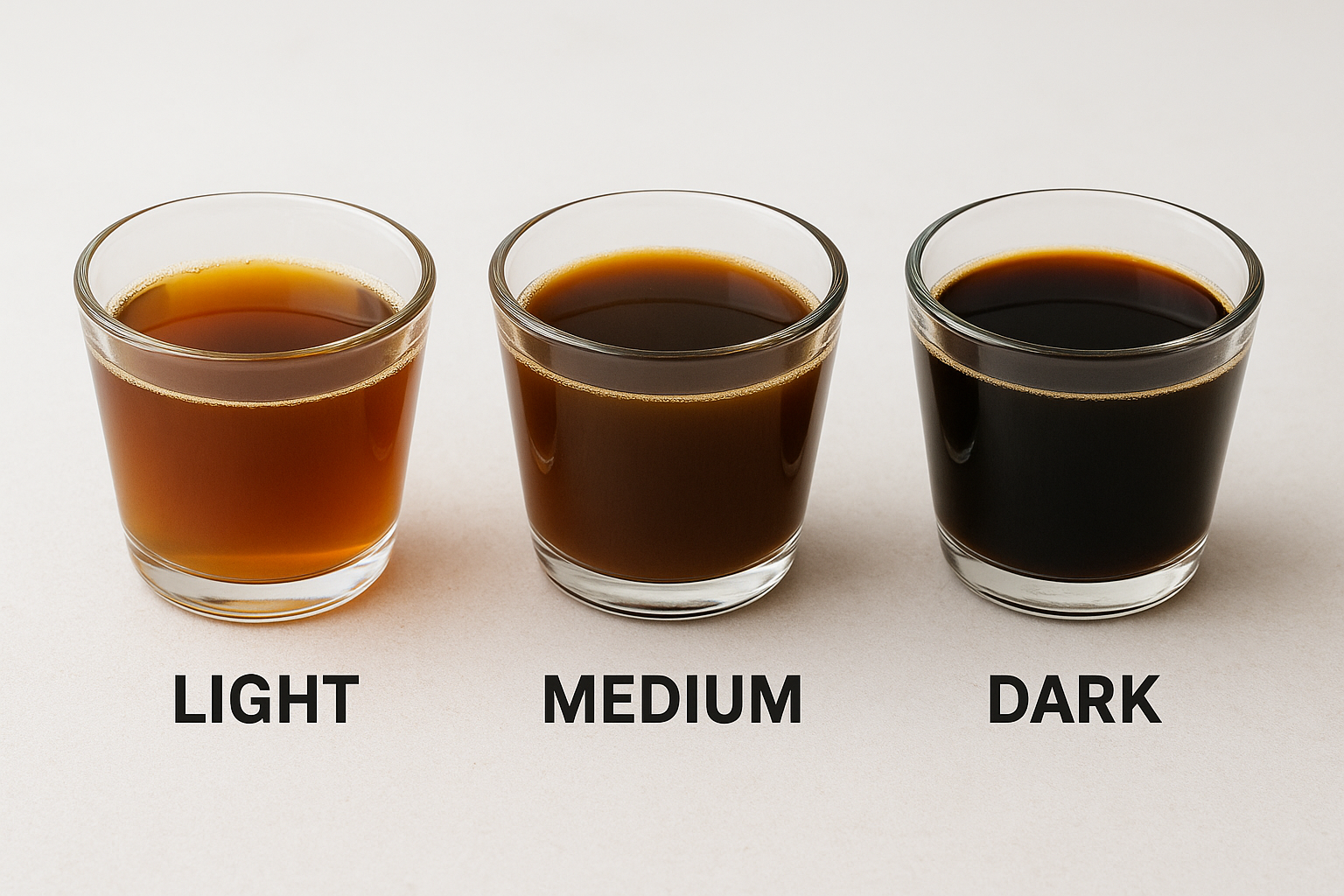
The roast level determines whether you taste the farm's terroir or the roaster's technique.
Body and mouthfeel across the spectrum
Light roasts produce thinner body with less oil suspension, making the coffee feel lighter on your tongue. Medium roasts increase body through caramelization without becoming heavy, creating a viscous but balanced mouthfeel that most drinkers find approachable. Dark roasts maximize body by forcing oils to the surface, resulting in a thick, coating sensation that lingers after each sip. Your personal preference for texture matters as much as your flavor preferences when choosing between roast levels.
Caffeine, acidity, and other common myths
Coffee drinkers repeat the same misconceptions about light roast vs medium roast vs dark roast constantly, and most of these myths come from misunderstanding what roasting actually does to the bean. The biggest confusion centers on caffeine content and acidity, where assumptions directly contradict measurable reality. Breaking down these myths helps you make better choices based on what you actually want from your coffee.
The caffeine confusion everyone gets wrong
Dark roast doesn't contain more caffeine despite tasting stronger and more intense. Caffeine remains remarkably stable during roasting, so the difference between roast levels is negligible when measured by weight. Light roasts actually contain slightly more caffeine per bean because they retain more mass and density than darker roasts, which lose water weight during extended heating. If you scoop coffee by volume, dark roast gives you more beans per scoop and therefore more caffeine, but if you weigh your doses, light roast delivers marginally higher caffeine.
The perceived strength of dark roast comes from bitter compounds, not from caffeine concentration.
Acidity isn't about pH levels
People confuse perceived acidity with actual acidity, treating brightness in light roasts like it's harsh on your stomach. Light roasts taste more acidic because they preserve chlorogenic acids that create bright, citrusy flavors, but stomach irritation comes from other compounds entirely. Dark roasts reduce perceived acidity by destroying these flavor compounds, making the coffee taste flat and bitter instead of bright and complex. Your stomach reacts more to brewing method and coffee quality than to roast level, so switching to dark roast won't necessarily solve digestive issues.
How to choose the right roast for your brew method
Your brewing equipment determines which roast level performs best, and matching roast to method eliminates most frustration people experience when coffee tastes wrong. The way you extract coffee affects which flavor compounds make it into your cup, so understanding these interactions helps you choose between light roast vs medium roast vs dark roast based on how you actually brew.
Pour over and drip methods
Light and medium roasts excel in pour over and drip systems because these methods extract delicate compounds that darker roasts destroy during roasting. The slower extraction process pulls out complex flavor notes that get lost in faster brewing methods. Your V60, Chemex, or standard drip machine benefits from beans that retain origin character and acidity, making lighter roasts the natural choice for clarity and brightness. Medium roasts work when you want balanced sweetness without excessive acidity.
Match your roast to your extraction speed: slower methods reward lighter roasts, faster methods need darker options.
Espresso and concentrated brewing
Dark and medium roasts handle high-pressure extraction better because their developed body and reduced acidity create the thick, syrupy texture espresso drinkers expect. Light roasts in espresso machines often taste thin and overly acidic unless you dial in parameters perfectly, which requires skill most home brewers haven't developed yet. French press and cold brew also favor darker roasts because extended contact time amplifies bitterness that lighter roasts can't support without tasting sour. Your espresso machine or immersion brewer performs best with beans that survived longer roasting times.
Your next cup, made simpler
Understanding the differences between light roast vs medium roast vs dark roast gives you control over your coffee experience instead of leaving it to chance. You know now that lighter roasts preserve origin character and brightness, medium roasts balance sweetness with complexity, and darker roasts deliver bold body at the expense of nuanced flavors. Your brew method and personal taste determine which roast works best, not marketing claims or generic recommendations that ignore how you actually drink coffee.
The real test happens when you taste these differences yourself. Explore our single-origin coffees roasted to bring out exactly what each bean does best, whether you want the bright acidity of a Kenyan light roast or the caramel sweetness of a balanced medium. Your next cup doesn't require guesswork when you understand what you're actually buying and how roast level shapes every aspect of flavor, body, and brewing performance.