

Specialty Coffee Defined: What Is Specialty Coffee Exactly?
You've probably seen "specialty coffee" on bags, menus, and café signs. But what is specialty coffee exactly, and why does the label matter? The answer goes beyond marketing, it's a technical designation with specific grading criteria that separate exceptional beans from ordinary ones.
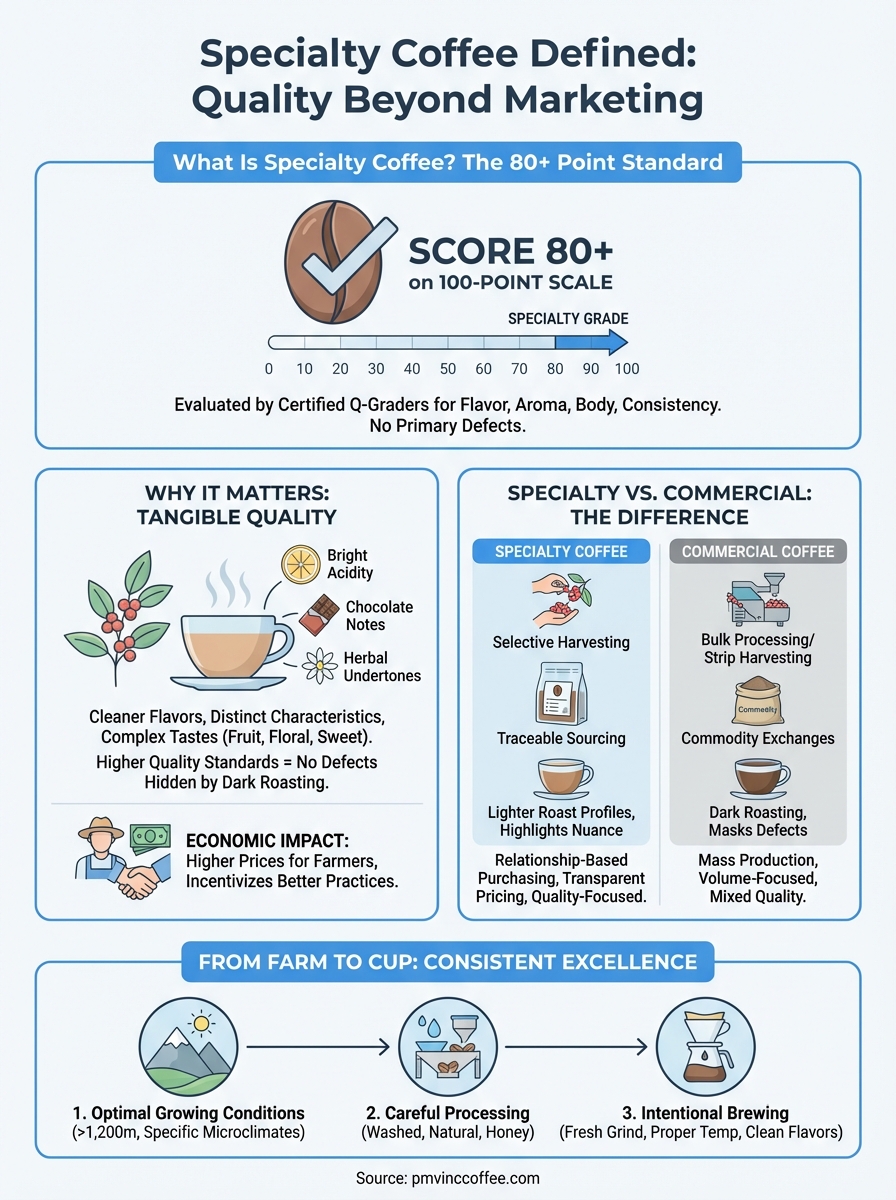
Specialty coffee earns its title through a rigorous scoring system where trained professionals evaluate beans on a 100-point scale. Only coffees scoring 80 points or above qualify. This isn't arbitrary preference; it reflects measurable quality in flavor, aroma, body, and consistency, qualities that come from careful cultivation, processing, and roasting.
At PVM Inc., we source and roast with these standards in mind because the difference between specialty and commercial coffee shows up in every cup. This guide breaks down what specialty coffee actually means, how the grading works, and why these distinctions matter for your morning brew.
Why specialty coffee matters
Understanding what is specialty coffee helps you make better purchasing decisions and appreciate what you're drinking. The 80-point threshold isn't arbitrary grading for the sake of grading; it represents tangible differences you can taste. When you invest in specialty coffee, you're getting beans that meet strict quality controls at every stage, from harvesting to roasting.
The practical impact shows up in your cup. Specialty beans produce cleaner flavors with distinct characteristics tied to their origin, while commercial coffee often tastes flat or bitter regardless of where it came from. This happens because commercial operations prioritize volume and consistency over flavor development, accepting lower-grade beans that specialty roasters would reject.
Quality you can taste every morning
Specialty coffee delivers flavor complexity that commercial brands can't match. You'll notice bright acidity in African beans, chocolate notes in South American origins, or herbal undertones in Indonesian coffees. These aren't artificial additives; they're natural characteristics preserved through careful processing and roasting.
Commercial coffee masks defects through dark roasting and blending, which burns away subtle flavors. Specialty roasters can afford to highlight these nuances because the underlying beans have no defects to hide. This means you taste what the coffee actually is, not what heavy roasting turned it into.
Higher quality standards mean you're not paying for defects, over-roasted bitterness, or generic blends that taste the same regardless of origin.
Economic and agricultural impact
Your purchase of specialty coffee directly affects farming communities. The specialty market pays significantly higher prices to farmers who meet quality standards, creating financial incentives for better agricultural practices. This premium pricing helps farms invest in improvements, pay workers fairly, and continue producing exceptional beans year after year.
Commercial coffee operates on commodity pricing, where farmers earn minimal returns per pound regardless of quality. This system discourages investment in better practices because higher quality doesn't generate higher income. Specialty coffee breaks this cycle by rewarding excellence, creating a supply chain where everyone benefits from better beans. Farmers earn sustainable incomes, roasters source superior products, and you get coffee worth drinking.
How specialty coffee gets graded
The grading process for what is specialty coffee follows a standardized protocol administered by certified Q-Graders, professionals trained by the Coffee Quality Institute. These evaluators use a 100-point scoring system that measures specific attributes in green (unroasted) coffee beans, with anything scoring 80 or above qualifying as specialty grade. This isn't subjective preference; it's a systematic evaluation that requires consistent training and calibration among graders worldwide.
The 100-point scale explained
The scoring system breaks down into ten weighted categories, each contributing to the final score. Major categories include fragrance/aroma, flavor, aftertaste, acidity, body, balance, uniformity, clean cup, and sweetness, with smaller allocations for overall impression. Each category receives points based on intensity and quality, with defects resulting in deductions that can disqualify beans from specialty status entirely.

You'll never see this evaluation yourself, but you benefit from its rigor. Specialty coffee must score consistently across all categories; a single major defect drops the rating below the threshold. This creates an incentive for producers to maintain quality control throughout cultivation and processing, since one bad step ruins the entire lot's classification.
What Q-Graders evaluate
Q-Graders perform cupping sessions where they taste multiple samples of the same coffee to ensure consistency. They brew the coffee using a standardized method (specific water temperature, grind size, and steeping time) to eliminate variables that might affect scoring. During evaluation, they assess whether flavors are clean, balanced, and free from defects like fermentation, mold, or phenolic tastes.
Only coffees with zero primary defects and minimal secondary defects can achieve specialty status, which explains why these beans command premium prices.
The grader then documents flavor notes, acidity levels, and body characteristics that help roasters understand what they're buying and how to develop the beans during roasting.
Specialty coffee vs commercial coffee
The difference between specialty and commercial coffee starts with fundamental priorities that affect everything from sourcing to roasting. Commercial coffee treats beans as a commodity product, focusing on volume, shelf stability, and price consistency. Specialty coffee approaches beans as agricultural products with distinct characteristics, where origin, processing method, and harvest timing directly impact the final cup.
Price and sourcing differences
Commercial roasters buy coffee through commodity exchanges where prices fluctuate based on futures markets rather than quality. This system encourages farmers to maximize yield over flavor, resulting in mass-produced beans that often include defects, unripe cherries, and mixed varieties. You'll pay less per pound, but you're also getting lower-quality beans that were never evaluated for taste.
Specialty coffee operates on direct trade or relationship-based purchasing, where roasters pay premiums for specific lots that meet quality standards. Farmers receive transparent pricing tied to cup scores rather than market fluctuations, creating incentive to invest in better cultivation practices. This explains why specialty coffee costs more; you're paying for selective harvesting, careful processing, and traceable sourcing that commercial operations skip entirely.
Understanding what is specialty coffee means recognizing that price differences reflect actual quality distinctions, not marketing.
Processing and quality control
Commercial coffee often undergoes strip-harvesting, where machines or workers collect all cherries at once regardless of ripeness. The beans then move through bulk processing designed for speed and volume, with minimal sorting to remove defects. Roasters compensate for inconsistent quality through dark roasting that masks off-flavors and creates uniform taste across batches.
Specialty producers use selective picking to harvest only ripe cherries, followed by careful processing that preserves inherent flavors. This attention continues through sorting, where workers remove defects by hand before beans reach roasters who develop lighter roast profiles that highlight origin characteristics rather than hide them.
From farm to cup, what makes it specialty
Understanding what is specialty coffee requires tracing its journey through every production stage where quality standards apply. The specialty designation depends on consistent excellence from cultivation through final roasting, not just high scores on a cupping table. Each step either preserves or damages the potential quality locked inside the coffee cherry, which explains why specialty producers invest more time and resources at every stage.
Growing conditions and harvest timing
Specialty coffee starts with intentional cultivation in specific microclimates where altitude, rainfall, and soil composition create ideal conditions for flavor development. You'll find most specialty beans growing at elevations above 1,200 meters, where cooler temperatures slow cherry maturation and allow complex sugars to develop. Farmers monitor ripeness carefully and use selective picking to harvest only cherries at peak maturity, a labor-intensive process that commercial operations skip.
The harvest window matters because under-ripe or over-ripe cherries introduce defects that disqualify entire lots from specialty status. This precision requires trained pickers who return to the same trees multiple times during harvest season, collecting only deep red cherries while leaving green ones to ripen further.
Processing methods that preserve quality
After harvest, specialty producers use specific processing techniques designed to protect inherent flavors rather than create artificial ones. The three main methods (washed, natural, and honey) each affect final taste profiles differently, but all require careful monitoring to prevent fermentation defects or contamination.
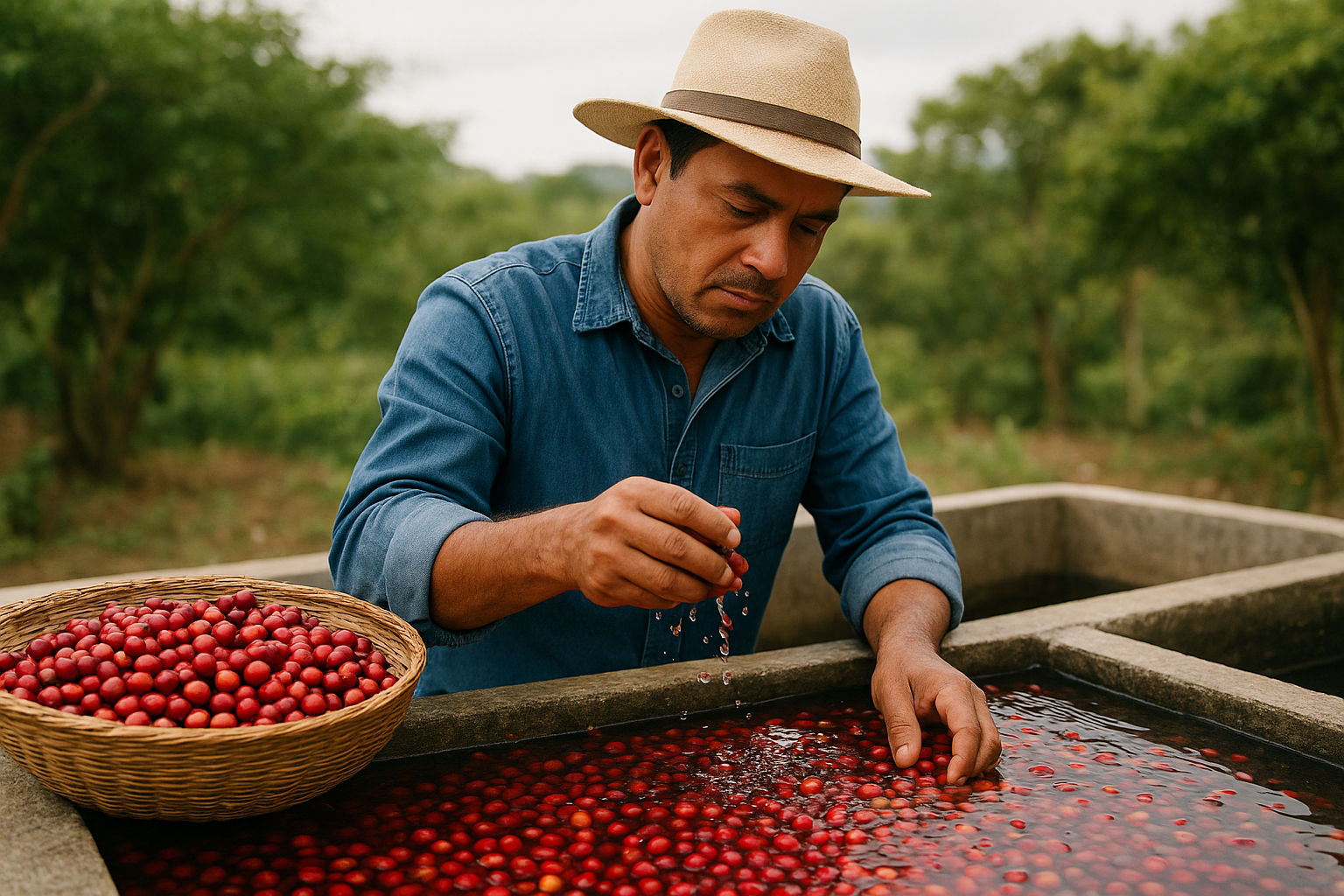
Processing choices directly impact whether beans achieve specialty scores, since defects introduced here can't be removed later.
You benefit from this attention because clean processing produces coffees with distinct characteristics tied to their origin rather than processing mistakes that create off-flavors.
How to choose and brew specialty coffee at home
Now that you understand what is specialty coffee, you can make informed purchasing decisions that maximize your investment. Start by looking for roast dates on the bag rather than expiration dates, since specialty coffee tastes best within three to four weeks of roasting. You'll also want to check for origin information that lists the specific country, region, or farm where beans were grown, which indicates transparency in sourcing.
Finding reliable specialty roasters
Your local specialty coffee shop often roasts in-house or sources from established specialty roasters who publish detailed information about their beans. Look for roasters who provide cupping scores, processing methods, and elevation data on their packaging or website. This transparency separates specialty operations from commercial brands that hide sourcing details behind vague marketing terms.
Online purchasing expands your options significantly. Many specialty roasters ship freshly roasted beans directly to customers, ensuring you receive coffee at peak freshness. Check reviews and verify that the roaster participates in direct trade relationships with farmers, which usually indicates commitment to quality standards beyond basic specialty certification.
Brewing methods that showcase quality
You don't need expensive equipment to brew specialty coffee properly. A pour-over dripper, French press, or AeroPress will extract clean flavors when you follow basic parameters: use water heated to 195-205°F, maintain a 1:16 coffee-to-water ratio (roughly 1 gram of coffee per 16 grams of water), and grind beans immediately before brewing.
Fresh grinding and proper water temperature preserve the delicate flavors that justify specialty coffee's premium price.
Consistency matters more than complexity. Measure your coffee and water by weight rather than volume, and adjust grind size based on taste rather than arbitrary instructions.
Next steps
Understanding what is specialty coffee transforms your daily brewing routine from habit into intentional practice. You now recognize the 80-point threshold, the differences between specialty and commercial beans, and the quality standards that justify premium pricing. This knowledge empowers you to make informed purchasing decisions rather than defaulting to whatever's available.
Your next action should be practical: purchase a bag of freshly roasted specialty coffee with detailed origin information on the label. Start with beans from a single origin rather than blends to experience the distinct characteristics we've discussed throughout this guide. Pay attention to roast dates and brew within three to four weeks for optimal flavor.
At PVM Inc., we source single-origin beans and specialty blends that meet these quality standards, roasting in small batches to ensure freshness reaches your cup. Browse our selection to find coffees from Uganda, Kenya, and other origins that showcase what specialty coffee delivers when sourced and roasted correctly.